Reducing environmental footprint through innovation in biocomposites: the case of Alstom's Eurobalise

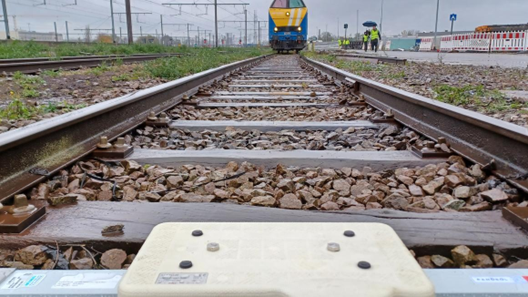
Since 2014, CLAYENS has transformed production of the Eurobalise product housing, an essential part for railway signaling systems, without affecting mechanical properties, by using a bio-based material derived from sugar beet waste produced by IDI.
This transition marks a significant step in our commitment to more sustainable and environmentally friendly solutions.
Background and challenges
The Eurobalise product housing for Alstom, initially made from petrochemical thermoset materials, must meet strict durability and performance requirements. Exposed to harsh environmental conditions (rain, snow, frost, UV), this part must withstand major mechanical and thermal stresses. It also includes anti-slip patterns and specific finishes.
Innovation et collaboration
In collaboration with Alstom and IDI, CLAYENS introduced a bio-composite to replace traditional thermoset materials, meeting a complex specification:
- Weather resistance: The new material delivers optimal performance even in extreme climate conditions.
- Mechanical properties: The bio-composite offers strength and durability comparable to traditional thermoset materials.
- Customization : The part can be customized for patterns, colors, shapes, logos, and more.
- Cost reduction: Thanks to its expertise, CLAYENS optimized manufacturing processes and modified tooling, reducing production costs.
- Reduced carbon footprint: Replacing petrochemical resin with bio-based resin lowers environmental impact. The resin used in this case comes from sugar beet industry waste, so it does not compete with human or animal food.
Results
CLAYENS produces between 15,000 and 25,000 Eurobalise product housings per year since 2014 and with this bio-based material since 2019. This success demonstrates CLAYENS' ability to support its customers in transitioning to more sustainable materials while maintaining competitive costs and meeting strict technical specifications.
Expertise and process mastery
CLAYENS processes more than 3,500 references across 40 different chemistries, reflecting our broad expertise in forming diverse materials. Our production process mastery and ability to innovate have enabled us to deliver tailored, effective solutions that meet our customers' specific needs.
Conclusion
The successful transition to bio-based materials for production of Eurobalise product housings for Alstom illustrates CLAYENS' commitment to sustainable innovation.